
Hereditary predisposition
How strongly your follicles react to androgens is genetically determined. The predisposition can come from either parent.
We explain the biological basics of hereditary hair loss, the role of DHT and known active ingredients. You learn which mechanisms matter and where a physician's assessment remains necessary.
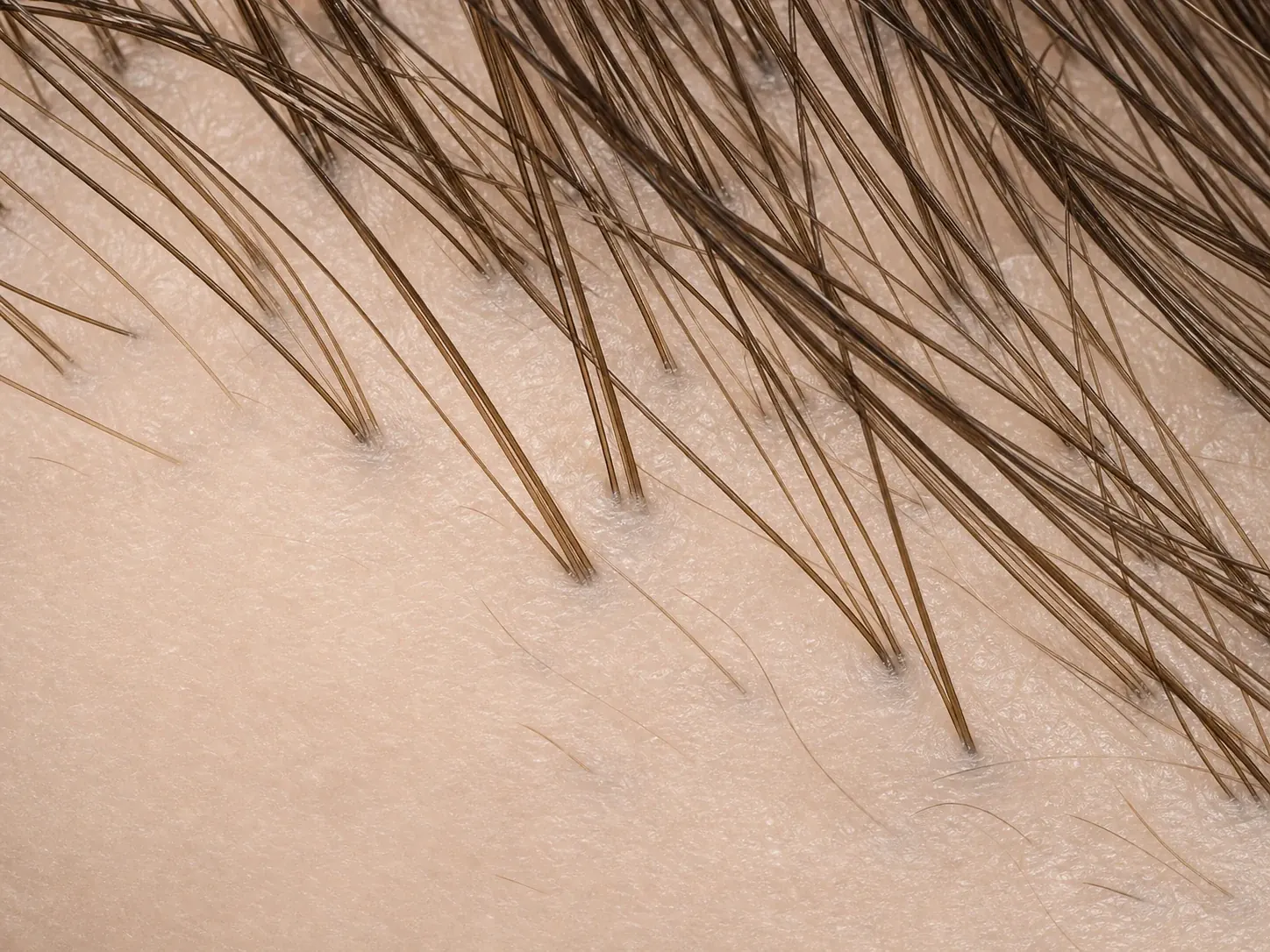
Hereditary hair loss follows known mechanisms. These three matter most.
Simplified illustration of hereditary sensitivity, DHT signals and shrinking sensitive hair follicles
How strongly your follicles react to androgens is genetically determined. The predisposition can come from either parent.
The enzyme 5-alpha-reductase converts testosterone into DHT. On sensitive follicles, DHT shortens the growth phase.
With each hair cycle the affected follicles shrink. Strong hairs become finer and shorter, until they stop growing.
Use this page as a clear orientation: which types of hair loss exist, which mechanisms matter and which treatment questions can be assessed by a physician. The links take you deeper into hair loss types, mechanisms of action, use and possible risks.
For more context, read our clear guide to possible side effects.
Hair loss types
Active ingredients
Androgenetic alopecia, diffuse shedding and other patterns do not have the same causes. That is why it helps to look at progression, pattern and possible triggers separately.
DHT, the hair cycle and follicle miniaturization help explain why active ingredients work in different ways and why results take time.
With this foundation, it is easier to understand which details matter, which risks need to be checked and which options a physician can assess.
Behind orva are dermatology specialists. They advise orva on the evidence-based content and processes.
During the consultation, physicians review your answers, possible risks and whether treatment is medically appropriate.
More about the teamYour individual formula is compounded by licensed Swiss pharmacies, exactly as prescribed by your doctor. They work to Swiss quality standards and ship the finished formula discreetly to your door.
orva connects you with licensed Swiss physicians and pharmacies and guides you through the whole process. Your treatment comes together step by step, from the medical review to delivery.
In-depth articles on causes, active ingredients and application.
Minoxidil in Switzerland: topical solution, foam and oral use compared — dosage forms, how they are applied, and which forms require a prescription.
What causes hair loss? Scientific fundamentals on genetics, DHT, hair follicle miniaturization, and treatment options.
How finasteride works for hair loss: mechanism of action, clinical studies and long-term data in androgenetic alopecia.
You start with a few questions about your situation and then see the next steps.
Start consultation